Posts

Showing posts with the label digital journalism

The audiences are in charge: are publishers listening?
Image
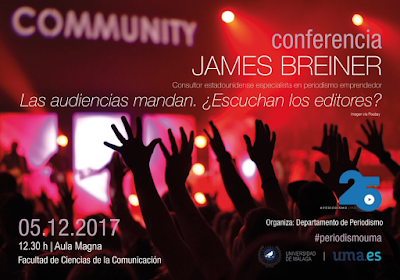
Recently I was invited to give a lecture at the University of Malaga --"The audiences are in charge: Are publishers listening?" The audience had students in their doctoral, master's and bachelor's programs, as well as a number of faculty. Below is a summary of the presentation. 1. The marriage of convenience between advertising and journalism is over. For proof, look no further than the graphic below, which shows that newspapers in Spain have lost more than 500 million euros in ad revenue since 2009, and that includes the revenue they get from digital. (The U.S. is very similar.) In the future, news media will need to develop a deep relationship with their users. The important thing will be not the quantity of eyeballs reached, as measured by page views and unique users, but the quality of the relationship with the users. Versi�n en espa�ol Read more �

Scientists battle for credibility on the web

Image
It is not just journalists who are under attack in the digital world. Scientists have to deal with their own conspiracy theories hatched by the ignorant and malicious. Online, science competes with fluff and bluff When science enters the sphere of politics, religion, and business, the battle is on. In the 17th century, Galileo was convicted of heresy by the Catholic Church for teaching that the Earth revolves around the Sun. Charles Darwin was heavily criticized by the Church of England in the 19th century for his theories of evolution. And the teaching of evolution is under attack today in U.S. schools. The tobacco industry for decades successfully discredited science and scientists whose research linked smoking to cancer. The National Rifle Association has successfully lobbied Congress to prevent the Centers for Disease Control from doing research on firearms injuries and deaths. And the New Republic recently chronicled how the new leaders of the EPA are discarding established scie...

Publishers pivot toward users and credibility, away from digital advertising

Image
For those who could not attend the annual convention of the Spanish Journalism Society (SEP, Sociedad Espa�ola de Period�stica , in Malaga, Spain, May 24-25, below is a summary of my keynote address. (Here are slides of the English version , presented Sept. 22 at the Creima Conference in Oporto, Portugal.) The talk focused on two major trends in digital journalism that are taking place in many places around the world. The slides highlight examples of media from France, Holland, Mexico, the U.S., Germany, Peru, England, Colombia, Argentina, and Brazil, among others. Photo by Jos� Mar�a Legorburu 1. Publishers are pivoting toward users and away from advertisers and investors as their main source of financial support . The business model that depended on advertising to support journalism is moribund and nearly dead. The automated buying and selling of advertising is controlled by the duopoly of Google and Facebook, which have more and better data about news publishers' users than th...

2018: Credibility will be the new currency for journalism

Editor's note: an earlier version of this post had typeface issues; my apologies. An organization I work with that promotes development of independent media in Latin America, SembraMedia.org , recently asked me to make some predictions for 2018. ??I really had just one: Credibility will be the new currency of journalism in 2018 and the years to come. ?But to explain, here are that prediction's corollaries:?? 1. Independent media--those based on serving the public rather than turning a profit---will grow in importance through revealing corruption and holding authorities accountable. There are many examples. In the U.S., organizations such as ProPublica and Texas Tribune ; in Spain, eldiario.es ; in Peru, OjoP�blico ; in Colombia, Connectas and La Silla Vac�a ; in Mexico, Aristegui Noticias and Animal Pol�tico ; in Argentina, Chequeado ; and hundreds of others around the world. ?2. These independent media that serve the public first rather than political or economic intere...

Restoring trust: Nieman Lab's helpful list of news credibility projects

Image
These projects aim to restore trust. In a blog post earlier this year, I wrote about the importance of Credibility as the new currency of journalism , its significance in an era of distrust of the media, and its economic value for high-quality journalism. A big thank you to Christine Schmidt of Nieman Lab who has just produced a helpful list of news credibility projects . Among other things, it shows how the Knight Foundation is giving help to many of them. Below is an abbreviated form of Schmidt's list, with a few details on each project. Trusting News Participants/partners : Mainly local newsrooms, such as WCPO, the Fort Worth Star-Telegram, St. Louis Magazine; also A Plus, Religion News Service, CALmatters, Discourse Media, USA Today The Trust Project Participants/partners : News outlets like the Washington Post, The Economist, the Globe and Mail, Mic, and Zeit Online; tech companies like Facebook, Google, Twitter, and Bing; Institute for Nonprofit News News Integrity Init...

'Students, you will determine the future of journalism'

Image
"You have to practice the values of independence and honesty." University of Navarra photo. An icon of Spanish broadcast journalism, I�aki Gabilondo , delivered a message last week designed to inspire and challenge 400 students and professors of journalism. "The future hasn't been written yet:, he told them. "The question, 'What is going to happen?' is irrelevant. What will happen will be determined by what you do, what you don't do, and what you allow to happen." Gabilondo, 73, was speaking at his alma mater, the School of Communication of the University of Navarra (class of 1963), where he also was a professor for several years. His eloquent baritone voice is well known to Spaniards after decades of presence on the morning radio news program Hoy por Hoy , roughly equivalent to NPR's Morning Edition . He recently asked Martin Baron , executive editor of the Washington Post, how journalism can survive amid all the problems we face, includin...

Users will own the media: how journalism is evolving

Image
Alfredo Trivi�o has worked largely behind the scenes on some of the biggest digital media projects for some of the biggest brands in the world. But you might not have heard of him. Alfredo Trivi�o: users will own the media, in every sense He spent seven years in senior management roles at News Corp., ultimately as director of innovation, where he worked on development of a pay model for digital journalism and on long-term editorial and commercial growth strategies. (He is a 1999 graduate of the University of Navarra School of Communication, where I teach.) He was invited to give the closing keynote address last week to the annual conference of the Spanish Journalism Society (SEP, Sociedad Espa�ola de Period�stica). He ruminated casually about trends he sees in the worlds of digital journalism and digital commerce, mixing some English terminology into his Spanish presentation. Among the shifts he sees: A shift from journalism and commerce to journalism vs. commerce. That is, the...

Where the jobs are for graduates in journalism

Image
"The new journalism specialties". The graphic shows that 56% of the Spanish journalists surveyed work in media that have community managers, and 30% employ data and traffic analysts. Click to enlarge the graphic. Where will the jobs be for graduates in journalism and communication? The results of a survey of journalists in Spain give some indication. The urgent demand is for people with digital media skills, but more on that in a minute. The Press Association of Madrid 's (abbreviated to APM in Spanish) 2017 survey was sent to 13,500 professionals, and the overall response rate was a respectable 13%. A little more than a third were working in journalism while another third were working in other professions or were retired or semi-retired. The remaining 30 percent were working in communications, mainly advertising and public relations. (News articles about the survey are here , here , and here in Spanish. Disconnect in training The survey results show that the respondent...

What money can't buy in media

Image
Money talks. Put your money where your mouth is. Show me the money. We have lots of expressions that equate money with crebility and trust. How people get and spend their money is often the most credible expression of what they value and who they are. We attribute so much value to money and to the way it expresses our true beliefs that historian Yuval Noah Harari declared in his bestseller Sapiens: A Brief History of Humankind : "Money is accordingly a system of mutual trust, and not just any system of mutual trust: money is the most universal and most efficient system of mutual trust ever devised." By extension, this belief in money as the best measure of value of everything in modern society -- the loss of a loved one (insurance payouts), the salary of a teacher or a CEO, a barrel of oil -- has led us to trust markets too much . In fact, many studies have shown that the media marketplace puts great value in misinformation , disinformation, sensationalism, gossip, and en...

The dirty words journalists have to say without blushing

Image
The following text is a translation from the Spanish version of a lecture I gave at the University of La Sabana in Bogot�, Colombia, on Aug. 22. My lecture, in Spanish, starts at the 6-minute mark of the video. Journalists today have the opportunity to create the future of the industry. But to do so, we have to change some of our long-held beliefs and attitudes. We have to create new business models (O, those awful words!) and learn to say some words without blushing. This need to change comes about because of the nature of our profession, which for most is a vocation. As journalists we have to keep our distance from political and business interests to maintain our credibility. Still, as a group we can be arrogant, self-righteous and holier-than-thou (I include myself in this criticism). We tend to view ourselves as high priests of an exclusive profession and bearers of a special ethical standard that few others can live up to. We see ourselves as purer, more objective, less affecte...

Think small: the new metrics of engagement for news

Image
Forget about the big numbers of total page views per month or unique users per month. Fans are engaged and willing to give their time and money. Those numbers are misleading and meaningless. They had meaning only in the days when the media business depended on mass media , massive audiences , and products aimed at the masses . That was when the news media depended on advertising. Today the business of media is all about touching potential customers with personalized, customized messages. It's about identifying the small number of people who are truly fans of your publication or the stars on your team. It's about strengthening the emotional attachment people have to your brand and its mission. How the big numbers mislead us In their very successful campaign to reach 1 million paid subscriptions for their digital-only edition, the Washington Post learned that the users most likely to subscribe came to their site three times a month . Read more �

Journalists and sales: don't sell your soul

Image
Over the past several years, I have written a number of blog posts about how journalists can get involved in sales and marketing without violating their ethical standards or damaging the credibility of their publication. Here are a few of them. 1. Journalists selling ads: think of it as a fair exchange When I was going through the transition from editor of a business publication to the role of publisher, I dreaded sales calls with clients. "It meant I had to ask clients for money, which was a new and uncomfortable experience. The hilarious irony of this is that, as a reporter and editor, it was my job to ask people much tougher, more-intrusive questions, and I did it with no problem -- grieving parents about the death of their child, a political candidate about his sexual escapades, a business executive about her salary. How tough could it be for a former reporter to ask an advertiser for money? Read more �

Picard to publishers: get cozy with readers, users

Image
Robert Picard speaking to class at University of Navarra. Robert G. Picard is one of the founding fathers of the academic discipline known as media economics. The field has attracted more attention lately as news outlets, ravaged by digital competitors, have gutted their reporting staffs and slashed public-service coverage. Policy makers, media executives, investors, and journalists themselves look to experts like Picard for answers about how to deal with the industry's financial crisis and the diminishing supply of news. Picard admits that he is unsure of exactly what the future holds for the industry. What he does know is that the people who are running media organizations--TV, radio, newspapers, magazines, and even digital outlets--know far too little about their readers, viewers, listeners, and users. Publishers need to invite these consumers into the processes of creating and distributing content, he said. They need to think about how to create value that will satisfy the need...

Publishers look beyond Facebook, Google for revenues

Image
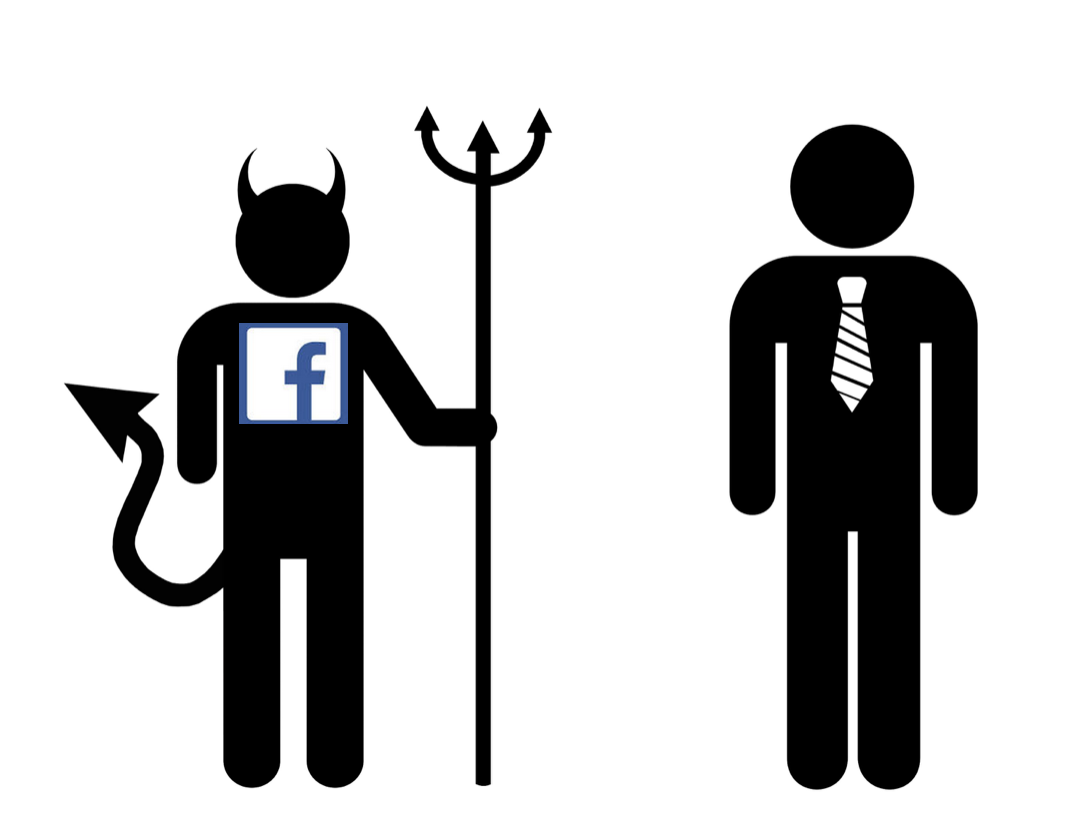
A deal with the devil. A new study by the World Association of Newspapers and News Publishers (WAN-IFRA) confirms what I have suspected for a long time: when publishers rely on Facebook for distribution, they are making a deal with the devil. "Reality Check: Making Money with Facebook" was based on a survey of an "expert group" of 150 publishers. On average, Facebook was contributing only 7% of their revenues in spite of the fact that much of the publishers' content was being consumed on that platform. And Facebook is stingy when it comes to sharing revenue with publishers, compared with Google, Spotify, Twitter, and others. It "seems to share proportionally less revenue with content creators than other platforms do." Loss of branding power The WAN-IFRA findings are also troubling because studies by Pew Research (see paragraph 4 of the study) and the Reuters Institute for the Study of Journalism (see p. 16 of the study) have shown that users think F...

'We interrupt this class for news of your ex-girlfriend'

Image
As a professor, I often wonder what effect my class presentations are having on the minds of my students. Honestly, is it really possible for any human being to pay attention completely to a class for 45 minutes? Or does the mind wander? While I am explaining the theory of market externalities , every media company in the world is fighting for the attention of those students. These companies are desperate to attract eyeballs for their content and their advertisers' messages. They have developed ever more powerful tools to distract people from what they are doing and look at their smartphones. They use pings, vibrations, badges, flashing lights , lock-screen messages, and who knows what else. What human being could pay attention to me when they receive a notification on their smartphone that their ex has commented on their new profile photo? Or that there is breaking news about the latest silly statements by a president? It's no contest. Versi�n en espa�ol The Notification Exp...

Women are making their mark in digital news startups

Image
Women are taking a leadership role in the development of digital journalism in Latin America, according to a new study of 100 startups. The study, Inflection Point , by SembraMedia in partnership with Omidyar Network, offers many clues to achieving the elusive goal of sustainability for new digital media. Click to enlarge. One clue is that women have the skills and experience to lead the way: 62% of the 100 organizations in the study had at least one woman founder, and women represented 38% of the total founders of all the media (p. 41 in the PDF version ). Extensive interviews with the founders -- 25 each from Argentina, Brazil, Colombia, and Mexico -- produced data that clarified the elements of successful business models and showed the best places to invest resources and training. "This finding suggests that women are taking advantage of the low barriers to entry in digital media startups to go around the glass ceilings of traditional media and build their own publishing compa...

100 digital news startups in Latin America show paths to achieving sustainability

Image
A new study of 100 digital news startups in Latin America by SembraMedia in partnership with Omidyar Network -- Inflection Point -- offers many clues to achieving the elusive goal of sustainability. Extensive interviews with the founders -- 25 each from Argentina, Brazil, Colombia, and Mexico -- produced data that clarified the elements of successful business models and showed the best places to invest resources and training. Janine Warner , co-founder of SembraMedia and an ICFJ Knight Fellow, directed the study, which was managed by her co-founder, Mijal Iastebner. (Disclosure: I participated in the study as an editor.) Among the insights: You don't need a lot of money to get started. 71% of the media in this study had startup capital of less than $10,000, but a tenth of those now generate at least $500,000 in revenues (p. 8). Those that focus on business development do best. Those with at least one sales person reported median annual revenues of $117,000; those with no sales ...

Top reason globally for paying for news? Mobile access

Image
Richard Fletcher of the Reuters Institute has produced an in-depth analysis of the top reasons people around the world gave for paying for news online. The Digital News Report 2017 included interviews of more than 70,000 adults in 36 countries. Fletcher observed that the most common reasons people gave for paying were they wanted access on their mobile devices (30%), they like to consume news from a range of sources (29%), or they were offered a good deal or package (23%). My take on Fletcher's data: The message to digital news publishers should be clear: they need to make sure their content displays rapidly and adapts well to the small screen--responsive design. Also, they should be testing various prices and packages for online content to see which ones produce the best returns. Read more �

When they trust media less, they're willing to pay more

Image
Alfonso Vara-Miguel A new study of internet users in Spain shows that those who trust "the media" less are more willing to pay for news online. The explanation for this counterintuitive behavior is that those distrustful folks "are willing to pay for those specific media that they trust", according to the researchers, Alfonso Vara-Miguel of the Universidad de Navarra and Manuel Goyanes of the Universidad Carlos III of Madrid. ( The full text of their article is in Spanish: "The probability of paying for digital news in Spain," in El Profesional de la Informaci�n .) In other words, trust and confidence have an economic value that media organizations can monetize . Manuel Goyanes Getting people to pay Media economists like to say that the Spanish are legendary cheapskates when it comes to paying for any form of media. But the researchers believe they have identified some of the market segments most likely to pay for news . They base their conclusions o...

Email bulletins help news media beat the duopoly

Image
We talk too much about the New York Times when the crisis of journalism is also about saving local news operations and digital entrepreneurs. But the latest news about how the Times is using email newsletters can be applied to all news organizations. Digiday reported that the Times has 13 million subscribers to more than 50 email newsletters. What this means is that the Times has a direct communications channel with its users in a walled garden that Facebook and Google, the giants of digital advertising revenue, cannot touch. When users get an email and click on a link, they go right to the Times website and the newspaper's own advertisers. It also means that the people who subscribe to the free newsletters by registering have a more intimate relationship with the publication. Versi�n en espa�ol Read more �