Posts

Showing posts with the label credibility

The audiences are in charge: are publishers listening?
Image
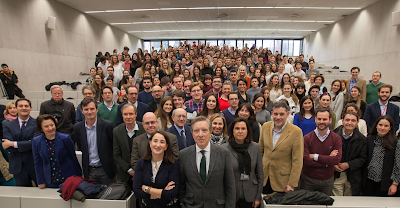
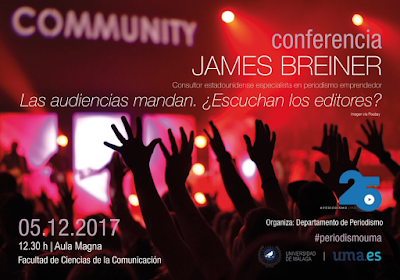
Recently I was invited to give a lecture at the University of Malaga --"The audiences are in charge: Are publishers listening?" The audience had students in their doctoral, master's and bachelor's programs, as well as a number of faculty. Below is a summary of the presentation. 1. The marriage of convenience between advertising and journalism is over. For proof, look no further than the graphic below, which shows that newspapers in Spain have lost more than 500 million euros in ad revenue since 2009, and that includes the revenue they get from digital. (The U.S. is very similar.) In the future, news media will need to develop a deep relationship with their users. The important thing will be not the quantity of eyeballs reached, as measured by page views and unique users, but the quality of the relationship with the users. Versi�n en espa�ol Read more �

Scientists battle for credibility on the web

Image
It is not just journalists who are under attack in the digital world. Scientists have to deal with their own conspiracy theories hatched by the ignorant and malicious. Online, science competes with fluff and bluff When science enters the sphere of politics, religion, and business, the battle is on. In the 17th century, Galileo was convicted of heresy by the Catholic Church for teaching that the Earth revolves around the Sun. Charles Darwin was heavily criticized by the Church of England in the 19th century for his theories of evolution. And the teaching of evolution is under attack today in U.S. schools. The tobacco industry for decades successfully discredited science and scientists whose research linked smoking to cancer. The National Rifle Association has successfully lobbied Congress to prevent the Centers for Disease Control from doing research on firearms injuries and deaths. And the New Republic recently chronicled how the new leaders of the EPA are discarding established scie...

Publishers pivot toward users and credibility, away from digital advertising

Image
For those who could not attend the annual convention of the Spanish Journalism Society (SEP, Sociedad Espa�ola de Period�stica , in Malaga, Spain, May 24-25, below is a summary of my keynote address. (Here are slides of the English version , presented Sept. 22 at the Creima Conference in Oporto, Portugal.) The talk focused on two major trends in digital journalism that are taking place in many places around the world. The slides highlight examples of media from France, Holland, Mexico, the U.S., Germany, Peru, England, Colombia, Argentina, and Brazil, among others. Photo by Jos� Mar�a Legorburu 1. Publishers are pivoting toward users and away from advertisers and investors as their main source of financial support . The business model that depended on advertising to support journalism is moribund and nearly dead. The automated buying and selling of advertising is controlled by the duopoly of Google and Facebook, which have more and better data about news publishers' users than th...

2018: Credibility will be the new currency for journalism

Editor's note: an earlier version of this post had typeface issues; my apologies. An organization I work with that promotes development of independent media in Latin America, SembraMedia.org , recently asked me to make some predictions for 2018. ??I really had just one: Credibility will be the new currency of journalism in 2018 and the years to come. ?But to explain, here are that prediction's corollaries:?? 1. Independent media--those based on serving the public rather than turning a profit---will grow in importance through revealing corruption and holding authorities accountable. There are many examples. In the U.S., organizations such as ProPublica and Texas Tribune ; in Spain, eldiario.es ; in Peru, OjoP�blico ; in Colombia, Connectas and La Silla Vac�a ; in Mexico, Aristegui Noticias and Animal Pol�tico ; in Argentina, Chequeado ; and hundreds of others around the world. ?2. These independent media that serve the public first rather than political or economic intere...

Restoring trust: Nieman Lab's helpful list of news credibility projects

Image
These projects aim to restore trust. In a blog post earlier this year, I wrote about the importance of Credibility as the new currency of journalism , its significance in an era of distrust of the media, and its economic value for high-quality journalism. A big thank you to Christine Schmidt of Nieman Lab who has just produced a helpful list of news credibility projects . Among other things, it shows how the Knight Foundation is giving help to many of them. Below is an abbreviated form of Schmidt's list, with a few details on each project. Trusting News Participants/partners : Mainly local newsrooms, such as WCPO, the Fort Worth Star-Telegram, St. Louis Magazine; also A Plus, Religion News Service, CALmatters, Discourse Media, USA Today The Trust Project Participants/partners : News outlets like the Washington Post, The Economist, the Globe and Mail, Mic, and Zeit Online; tech companies like Facebook, Google, Twitter, and Bing; Institute for Nonprofit News News Integrity Init...

'Students, you will determine the future of journalism'

Image
"You have to practice the values of independence and honesty." University of Navarra photo. An icon of Spanish broadcast journalism, I�aki Gabilondo , delivered a message last week designed to inspire and challenge 400 students and professors of journalism. "The future hasn't been written yet:, he told them. "The question, 'What is going to happen?' is irrelevant. What will happen will be determined by what you do, what you don't do, and what you allow to happen." Gabilondo, 73, was speaking at his alma mater, the School of Communication of the University of Navarra (class of 1963), where he also was a professor for several years. His eloquent baritone voice is well known to Spaniards after decades of presence on the morning radio news program Hoy por Hoy , roughly equivalent to NPR's Morning Edition . He recently asked Martin Baron , executive editor of the Washington Post, how journalism can survive amid all the problems we face, includin...

Users will own the media: how journalism is evolving

Image
Alfredo Trivi�o has worked largely behind the scenes on some of the biggest digital media projects for some of the biggest brands in the world. But you might not have heard of him. Alfredo Trivi�o: users will own the media, in every sense He spent seven years in senior management roles at News Corp., ultimately as director of innovation, where he worked on development of a pay model for digital journalism and on long-term editorial and commercial growth strategies. (He is a 1999 graduate of the University of Navarra School of Communication, where I teach.) He was invited to give the closing keynote address last week to the annual conference of the Spanish Journalism Society (SEP, Sociedad Espa�ola de Period�stica). He ruminated casually about trends he sees in the worlds of digital journalism and digital commerce, mixing some English terminology into his Spanish presentation. Among the shifts he sees: A shift from journalism and commerce to journalism vs. commerce. That is, the...

How publishers can overcome loss of Facebook traffic

Image
Now that Facebook has made clear that it will not be promoting journalism to its users, all of the publishers who were getting much of their traffic there should look elsewhere. ( Frederic Filloux of Monday Note has one of the best analyses of the company's announcement .) What now? Well, there are several tactics and strategies that publishers can take to replace what they have lost (and will lose) from Facebook's pivot away from news. (I have also written about such strategies in Spanish.) 1. A tactic: start an email newsletter with links to your content. Think of it as a walled garden that protects you from Facebook. Daily, weekly, or monthly newsletters create a more intimate relationship with users. Some publications have several on different topics, such as technology, business, public safety, or politics that users can select from. Local news sites in particular can benefit from daily newsletters. The links to your content send users directly to your site, and any ad ...

Smart money is betting on local, trustworthy news

Image
This blog post started out as an explanation to my friends and family in Cleveland and Columbus, Ohio, why their local newspapers had become shadows of their former selves . Why their newspapers were so thin. Why news coverage was so shallow. Why they felt like they weren't getting their money's worth. From trust to distrust in one decade. Pew . And we will get there in a minute, but first, some good news. It was heartening to see the Knight Foundation's recent announcement that it was committing $300 million over five years to strengthen journalism, from the ground up, by focusing on local news and on encouraging collaboration. �We�re not funding one-offs. We�re helping to rebuild a local news ecosystem , reliable and sustainable, and we�re doing it in a way that anyone who cares can participate,� said Alberto Ibarg�en, Knight Foundation president. Gradually, civic minded individuals and organizations have realized that the loss of local news coverage threatens...

What money can't buy in media

Image
Money talks. Put your money where your mouth is. Show me the money. We have lots of expressions that equate money with crebility and trust. How people get and spend their money is often the most credible expression of what they value and who they are. We attribute so much value to money and to the way it expresses our true beliefs that historian Yuval Noah Harari declared in his bestseller Sapiens: A Brief History of Humankind : "Money is accordingly a system of mutual trust, and not just any system of mutual trust: money is the most universal and most efficient system of mutual trust ever devised." By extension, this belief in money as the best measure of value of everything in modern society -- the loss of a loved one (insurance payouts), the salary of a teacher or a CEO, a barrel of oil -- has led us to trust markets too much . In fact, many studies have shown that the media marketplace puts great value in misinformation , disinformation, sensationalism, gossip, and en...

It takes a village to identify false news

Image
Filloux: A credibility scorecard Liberal democracies are being tested around the world by the rapid diffusion of misleading or false information designed to influence voters. It has happened in France , Catalonia , the U.K. , and, of course, the U.S. Many have proposed--for example, the World Economic Forum --that two of the most powerful vehicles for spreading information, Facebook and Google, should be responsible for filtering out material that is demonstrably false or misleading. Versi�n en espa�ol. But it turns out that this is not easy to do. False information is often irresistibly appealing and moves too fast to be stopped. Why we're Still in the Dark about Facebook's Fight Against Fake News -- Mother Jones Nine experts offer opinions on how to fix Facebook -- New York Times Not an editor, but a scorecard What's more, it is hard to define false news in a way that can be automated by algorithms. Journalist and media consultant Frederic Filloux has developed the News...

The day Maureen Dowd wrote f--- news and a revered political commentator didn't get the joke

Image
Amid all the debate about what is true and what is f--- news, I am reminded of a remarkable journalistic moment that showed how hard it is to know when someone is kidding or serious. And how you can be sincere but spread false information. Dowd (Fred R. Conrad photo, New York Times) It was early in 2009, the first months of the Obama presidency, and Maureen Dowd, the sly and witty New York Times columnist, put tongue in cheek to describe how she had gained exclusive access to classified testimony of a supposedly secret meeting of the Senate Intelligence Committee. In the scene created by Dowd, Democrats on the committee, led by Dianne Feinstein, are grilling former Vice President Dick Cheney about the torture methods he and President George W. Bush approved to interrogate terrorism suspects. Dowd dropped hints all through the column that it was a put-on. The first clue should have been that a columnist was playing the uncharacteristic role of an investigative reporter writing about lea...

How quality content can win in the long run

Image
Digital advertising is broken for many publications. Back in the days when my job was persuading advertisers to spend money with our business publication, I would talk about the importance of a client's ad appearing next to credible, high-quality content. Editorial environment matters , was the argument. Google, Facebook, and Yahoo pretty much destroyed that business model. They promised advertisers to deliver their ads to specific demographic groups with little waste -- for example, female executives in Baltimore who have searched for information about luxury automobiles in the past year. And their prices were much lower. But the importance of high-quality, credible content has just resurfaced in a big way. Some major advertisers in England pulled their ads from Google and YouTube because their ads were placed next to content of extremist organizations promoting hate speech. Among those pulling ads were French advertising giant Havas, the BBC, the UK government, and The Guardia...