Posts

Showing posts with the label investigative journalism

This hub nurtures investigative journalism in LatAm
Image
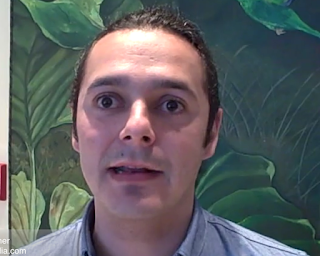
Huertas: Developing the next generation BOGOTA, Colombia -- Independent news media in Latin America often lack the financial resources to act as a counterweight to the political powers and multinational businesses in the region. But these media, many of them digital natives, have found that by banding together they can multiply their scarce resources and magnify their impact beyond their borders to challenge these powers. One example is a platform for journalists interested in investigative journalism, Connectas.org, based in Bogota, which organizes training and operates a collaboration hub for investigative journalists (in Spanish, ConnectasHub), offers grants of up to $3,000 , and publishes investigative projects from all over the region. Versi�n en espa�ol The founder and director of Connectas, Carlos Eduardo Huertas , told me in an interview that the goal of the platform is to "pull together a new generation of journalists with training in practical methods of doing in-depth...

Loyal users will pay for watchdog journalism

Image
Kinsey Wilson. Photo by Mary Kang/Knight Center AUSTIN, Texas -- One of the dirty little secrets in digital media is that the big numbers of page views and unique users touted by publishers are misleading at best . They overstate a publication's audience size and impact. Most visitors to a publisher's content are fly-bys : They stay for only a few seconds. And even if they stay longer than that, the vast majority come to a publisher's website only once or twice a month . These are not loyal users devoted to a brand. What is more interesting and meaningful, especially for publishers of serious news and information, is that the smaller number of loyal users -- who come frequently, linger, and read many pages -- is willing to pay for the content and other products. They identify strongly with the brand. Kinsey Wilson , editor of innovation and strategy at the New York Times , brought the point home last week at the International Symposium on Online Journalism when he mentio...

Panama Papers: Lone-wolf journalists form a pack

Image
Investigative journalists have achieved a new level of sophistication and collaboration as shown by this explosive investigation of offshore tax havens used by the wealthy and powerful. The investigation by 109 media organizations from 76 countries has shaken government leaders from China to Russia to Great Britain . It has led to the resignation of the prime minister of Iceland, who used a tax haven to avoid paying taxes on 3.5 million euros. The 376 journalists on the Panama Papers team overcame many obstacles, not the least of which was their own competitiveness. All of these journalists and news organizations agreed not to publish any of their findings until the agreed upon time on Sunday April 3. Versi�n en espa�ol These journalists, who are accustomed to work like lone wolves and jealously keep their sources and information to themselves, had to "radically share" information with each other and overcome differences in language, culture, and practice. Read more �

ProPublica pioneers investigative journalism for the digital age

Image
PAMPLONA, Spain -- Given all the trash, half-truths and outright lies published on digital media, people are placing a higher value on media that verify information and demonstrate high ethical standards. Paul Steiger, taking questions at U. of Navarra event Paul Steiger , founder and executive chairman of ProPublica, tells of a major donor to his online publication who "absolutely hated" an investigative story that they had published about a group "near and dear to the donor's heart". Steiger told the donor that the information was verified, and the story was fair. "We will just have to agree to disagree," he told the donor. The donor, who had given $100,000 every year, stopped giving. And that would have been the end of the story, except that a year later, with no explanation, the donor's annual check arrived again. Steiger's point was that even people who disagree with you still respect journalism with high standards of accuracy and ethics....

An investigative journalist leaps from print to digital

Image
Oscar Castilla: "You have to think about the business model" SAN JUAN, Puerto Rico -- Oscar Castilla spent 12 years at El Comercio , Peru's most important daily newspaper, honing his reporting skills with investigations of organized crime and corruption. Versi�n en espa�ol Then in 2014, Castilla and some colleagues from the investigative unit decided to leave the paper for editorial reasons. "The editor at the time had one view of journalism and we had another," he told me in an interview. "We wanted to do some innovative things and the organization was against it." So they decided to launch their own news publication online, Ojo P�blico (Public Eye). Their first investigation about conflicts of interest among the mayors in metropolitan Lima was honored in Barcelona in June with a Data Journalism Award from the Global Editors Network . Read more �

An investigative journalist who thinks like a capitalist

Image
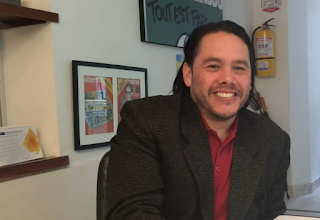
Martin Rodriguez Pellecer of Nomada SAN JUAN, Puerto Rico -- You usually don't hear an investigative journalist talk about the importance of learning business skills. But that is the case with Martin Rodriguez Pellecer , 32, founder of two notable digital news media organizations in Guatemala, Plaza Publica and Nomada , the latter launched last year. Versi�n en espa�ol "The most difficult thing for a journalist is to think like a capitalist, to realize that you have to invest and put money on the line", he told me in an interview. "You have to be flexible; you can't wed yourself to just one thing. You have to have lots of eggs in different baskets. No successful capitalist has just one line of business; all of them have lots of businesses." Read more �

Handful of data journalists shake up Mexican Congress

Image
The truth hurts, especially when the truth is contained in receipts from bars, hotels, spas, and luxury vehicle dealers. Israel Pi�a, from Quien Compro website. A group of five young Mexican journalists has spent the past year or so sifting through thousands of expense reports of Mexico's senators and deputies (congress) to see how they are using taxpayers' money. Among their scoops: Members of the Senate bought 10 Harley-Davidson motorcycles at a cost of 2.12 million Mexican pesos, or about US$130,000, in order to serve their constituents better. Senators spent 43,800 pesos on 210 bottles of wine , or US$2,700 in a four-month period. One senator bought a loaded Yukon Denali SUV for 890,000 pesos, or $60,000, for the use of an obscure agency whose purpose is to "do studies to help the Congress make decisions." The senator declined to respond to numerous requests for comment. Cartoon that accompanied the Harley-Davidson expos�. Versi�n en espa�ol These journalists, l...