Posts

Showing posts with the label Facebook

How publishers can overcome loss of Facebook traffic

Image
Now that Facebook has made clear that it will not be promoting journalism to its users, all of the publishers who were getting much of their traffic there should look elsewhere. ( Frederic Filloux of Monday Note has one of the best analyses of the company's announcement .) What now? Well, there are several tactics and strategies that publishers can take to replace what they have lost (and will lose) from Facebook's pivot away from news. (I have also written about such strategies in Spanish.) 1. A tactic: start an email newsletter with links to your content. Think of it as a walled garden that protects you from Facebook. Daily, weekly, or monthly newsletters create a more intimate relationship with users. Some publications have several on different topics, such as technology, business, public safety, or politics that users can select from. Local news sites in particular can benefit from daily newsletters. The links to your content send users directly to your site, and any ad ...

It takes a village to identify false news

Image
Filloux: A credibility scorecard Liberal democracies are being tested around the world by the rapid diffusion of misleading or false information designed to influence voters. It has happened in France , Catalonia , the U.K. , and, of course, the U.S. Many have proposed--for example, the World Economic Forum --that two of the most powerful vehicles for spreading information, Facebook and Google, should be responsible for filtering out material that is demonstrably false or misleading. Versi�n en espa�ol. But it turns out that this is not easy to do. False information is often irresistibly appealing and moves too fast to be stopped. Why we're Still in the Dark about Facebook's Fight Against Fake News -- Mother Jones Nine experts offer opinions on how to fix Facebook -- New York Times Not an editor, but a scorecard What's more, it is hard to define false news in a way that can be automated by algorithms. Journalist and media consultant Frederic Filloux has developed the News...

Publishers look beyond Facebook, Google for revenues

Image
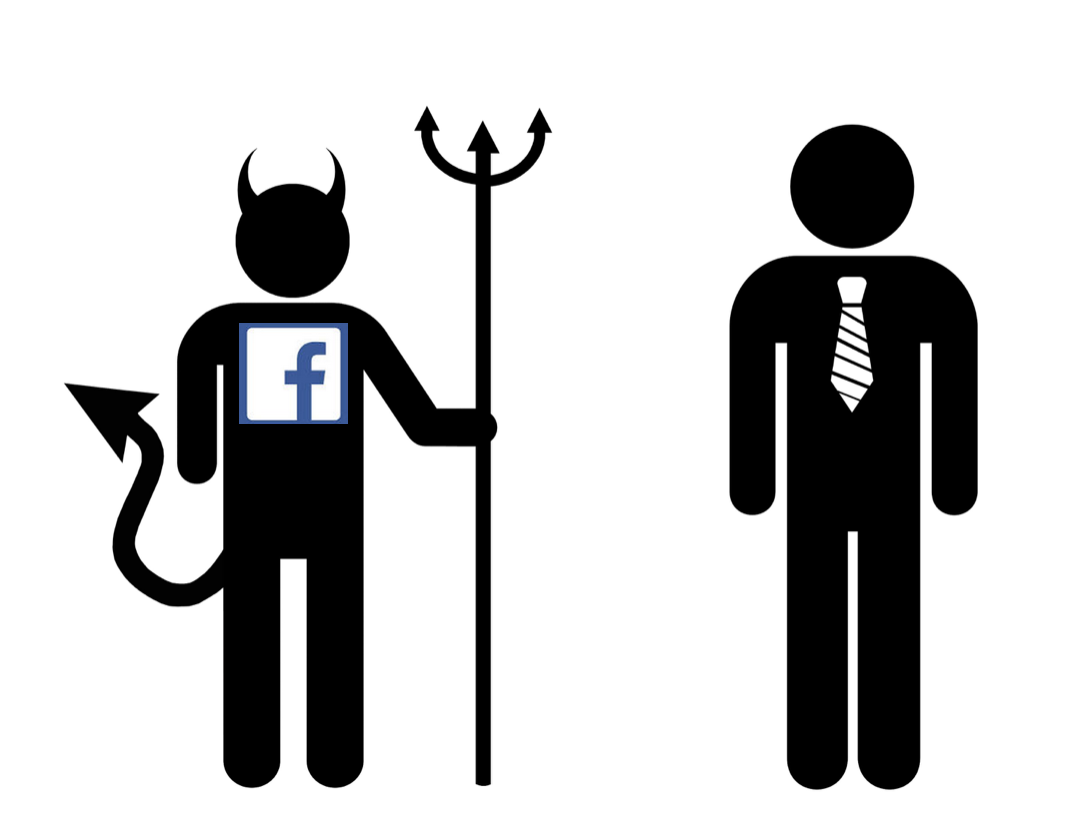
A deal with the devil. A new study by the World Association of Newspapers and News Publishers (WAN-IFRA) confirms what I have suspected for a long time: when publishers rely on Facebook for distribution, they are making a deal with the devil. "Reality Check: Making Money with Facebook" was based on a survey of an "expert group" of 150 publishers. On average, Facebook was contributing only 7% of their revenues in spite of the fact that much of the publishers' content was being consumed on that platform. And Facebook is stingy when it comes to sharing revenue with publishers, compared with Google, Spotify, Twitter, and others. It "seems to share proportionally less revenue with content creators than other platforms do." Loss of branding power The WAN-IFRA findings are also troubling because studies by Pew Research (see paragraph 4 of the study) and the Reuters Institute for the Study of Journalism (see p. 16 of the study) have shown that users think F...

How quality content can win in the long run

Image
Digital advertising is broken for many publications. Back in the days when my job was persuading advertisers to spend money with our business publication, I would talk about the importance of a client's ad appearing next to credible, high-quality content. Editorial environment matters , was the argument. Google, Facebook, and Yahoo pretty much destroyed that business model. They promised advertisers to deliver their ads to specific demographic groups with little waste -- for example, female executives in Baltimore who have searched for information about luxury automobiles in the past year. And their prices were much lower. But the importance of high-quality, credible content has just resurfaced in a big way. Some major advertisers in England pulled their ads from Google and YouTube because their ads were placed next to content of extremist organizations promoting hate speech. Among those pulling ads were French advertising giant Havas, the BBC, the UK government, and The Guardia...

Why fake news is beating traditional news

Image
Traditional news organizations made a deal with the devil when they turned to social media and search-engine optimization to gain digital audience and revenue. They recruited "community managers" to raise their profile on Facebook, Twitter, Instagram, and the like. They tagged their articles to raise them in search results. The devilish side of the deal was that presumably ethical news media were trying to sell credibility and verified information -- facts -- within a turbulent ocean of emotion. On social media, feelings are more important than facts. People want to declare who they are and what they believe. So they "like" and share stuff that reinforces their view of who they are and what they agree with. Emotions predominate over facts. Versi�n en espa�ol Articles that are popular, shared, and linked to will rise to the top of search results in Google and other search engines. It's easy to share or like something that reinforces your view of who you are. Mis...

Media value lies in relationships, not scale

Image
Amid all the news about how Facebook and Google are devouring the world , I would like to sound a note of optimism for digital news media. But first, let's acknowledge the bad news. It is true that the munch munch munch you are hearing is the sound of the Internet giants biting off big slices of the digital advertising pie . However, much of that has been at the expense of traditional news media. There is an opportunity for digital-only news media to fill the gap in local coverage. In the short term, this is not something to celebrate, since the decline of newspapers in particular has led to a big loss in watchdog journalism on the local level. The chart below, which has been published widely, shows the rise of Facebook and Google's advertising revenue concurrent with the decline in newspaper ad revenue. With information from Thomas Baekdal @baekdal and Ben Thompson @benthompson of Stratechery.com. Read more �

'Distributed content' expands reach, weakens influence of news organizations

Image
The following is an excerpt from my chapter of a book on digital news media that will be published shortly, in Spanish. Among the most important developments in digital journalism in 2015 was the emerging practice of creating, distributing, and monetizing news known as " distributed content ". Bell: 'Facebook is eating the world.' What it means: news media organizations hand over their content to platforms like Facebook without linking back to their own websites so that smartphone users can get nearly instant access to the content without having to wait five to 10 seconds for it to display -- an eternity for impatient mobile consumers. Versi�n en espa�ol Snapchat was the first platform to stake a claim in this new territory of competition when it launched its Discover channel in January of 2015. Facebook followed in June with its � Instant Articles �, and others such as Google, Instagram, and Apple quickly jumped on the bandwagon. These social and technological pl...

Is Facebook swallowing journalism? Embrace it, says Washington Post's digital chief

Image
Emilio Garcia-Ruiz speaks to the press in Huesca. Photo by EFE HUESCA, Spain -- Yes, it�s good to have a billionaire owner with patience, but it�s even better to have a billionaire owner with a vision. And the vision of Washington Post owner Jeff Bezos is that a news organization has to make its work available free, everywhere. Bezos is urging the publication's journalists to adopt the principles of retail sales that he has learned over the years in running Amazon , America's largest online retailer of practically everything. And the man who is putting that vision into practice is Emilio Garcia-Ruiz , the Post's managing editor for digital. Versi�n en espa�ol A fundamental concept in retail strategy is the sales funnel, Garcia-Ruiz said in his keynote address March 10 at the Digital Journalism Conference in Huesca, Spain. The idea is to get as many people as possible to sample your product (in journalism, it's through sharing in social networks ), get them to pay for...

New mobile platforms aid users, penalize publishers

News publishers are again the pawns in a chess game among the big technology platforms, mainly Google , Facebook , and Apple . And while publishers are losing control of their future, users are gaining a better experience with pages that load faster on mobile devices. This is the scenario that is emerging with the expanded rollout of Facebook's Instant Articles , Google's Accelerated Mobile Pages , and Apple's iOS9 and News products. I have spent a weekend reading over expert commentaries on the business and technical aspects of the latest innovations in Internet technology. What all three of these innovations have in common is that they are aimed at serving mobile users better and that they claim to help publishers gain revenue, audience, and data about users. Many of the commentators are worried that publishers are losing out to the platforms. Nilay Patel, editor-in-chief of the Verge , was warning back in November that the battle among Google, Facebook, and App...

News thrives on smartphones, but publishers don't

Image
The big players in digital news like The New York Times, Buzzfeed, and NBC News are struggling with a change in how they make money and how they define themselves as brands. The cause is the rapid migration of news consumers and advertisers to smartphones. This migration has put the news brands at the mercy of Internet giants Facebook , Google , Apple , and others who already monopolize digital advertising . Alan Mutter , the @newsosaur, has a deep dive on the trend and what it means for publishers. In essence, the news publishers have discovered that much of their audience -- in some cases, most -- is accessing their content on smartphone applications provided by the big technology platforms and social networks. This means that the publishers are losing control of their users and revenue. So the publishers have started doing something that looks like syndication of their product to the social networks and platforms. They tailor content to live on each of the platforms rather than ...

Jarvis's new role for journalists: be the organizer

Image
Jarvis: think first of the community Several years ago I was working in Belarus, a former Soviet republic, where independent newspapers have a hard time surviving. The government denies them access to state-monopoly newsstands, overcharges them for their newsprint, and harasses them at every turn. We looked at one publisher's website data to see if he might have an opportunity to generate revenue online. Turns out the website's most popular page contained the community's bus schedules. And what's more, his community spent more time on that page -- 5 minutes, 30 seconds per visit -- than any other. This publisher, a journalist, was humbled to see that a simple list was more important to his readers than the journalism. The Belarus example came to mind as I was reading Jeff Jarvis's new book , in which he talks about a new role for journalists: " Helping a community better organize its knowledge so it can better organize itself." Read more �

Deal with the Devil: Facebook, Google, mobile apps

Image
A deal with the devil. Versi�n en espa�ol It was the science fiction writer Arthur C. Clarke who wrote , "Any sufficiently advanced technology is indistinguishable from magic." And clearly many people think that way about applications for smartphones. Mobile apps can show us detailed maps of most places on earth. They can read QR codes that tell us when the next bus is coming to this stop. They alert us to the scores of sporting events we care about. They allow us to send text messages, free, to billions of people anywhere in the world ( WhatsApp and WeChat users alone account for nearly 2 billion). So we willingly give ourselves over to these services that do all these amazing things for us. Often we sign in to them using our Facebook or Google or Twitter accounts, thereby giving those social network platforms access to information about our preferences for products, who are friends are, where we are dining, and how we are amusing ourselves. Read more �

Reader loyalty gains strength as a news metric

Image
Michael McCutcheon of Mic.com As the publisher of a business newspaper in Baltimore, I used to tell advertisers confidently that no other news medium could duplicate our audience of CEOs, business owners, and high-income decision makers. First Yahoo Finance undermined us. With their user database, they could deliver advertisers the same people who were reading our newspaper, plus many with that profile who were not. (Versi�n en espa�ol) Now social networks like Facebook are using their data to do the same thing. They can promise to deliver that same targeted audience a lot cheaper. This is bad news for news publishers, especially since they have become more dependent on Facebook and other social networks for their Internet traffic. Publishers have a harder time establishing the value of their brand to advertisers. Pew Research reported in 2014 that 30 percent of U.S. adults get news from Facebook. That percentage has been growing, and other social networks, such as LinkedIn , are tr...

Freedom of the press for those who own one (or a search engine or a social network)

Image
A renowned media critic sounded the alarm in 1960 about corporate takeovers of newspapers and layoffs of hundreds of journalists. He worried that the power of the press was being concentrated in too few hands. Liebling, from Slate.com (Versi�n en espa�ol) It was in his column in the New Yorker, The Wayward Press, that A.J. Liebling tossed off one of his most memorable lines in a parenthetical aside: "Freedom of the press is guaranteed only to those who own one" (New Yorker, May 14, 1960, p. 109, paywall). What is still true today is that corporate owners of newspapers are focused on maintaining their profit margins and are laying off journalists to do so. The newspaper and magazine industries have lost 54,000 journalism jobs since 2003. But it is no longer true that newspapers monopolize production and distribution of news. The Internet has given everyone with a computer and Internet access their own printing press. You do not have to be a mogul to publish your opinions. The...